





Using AI-supported virtual nursing to help prevent patient falls
A HRSA-funded Telehealth Center of Excellence is using AI-supported virtual nursing to support bedside teams and help keep hospitalized patients safe.
Each year, between 700,000 and 1 million people fall while receiving care in hospitals across the United States. More than one-third of falls in hospitals cause an injury, such as a fracture or head trauma. Preventing falls requires tailored approaches including risk assessment, staff support, environmental changes, and technology.
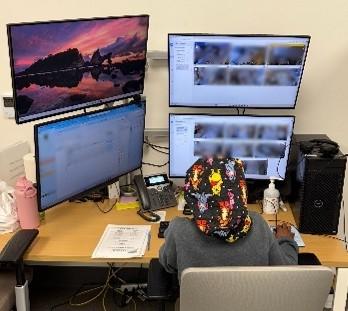
The University of Mississippi Medical Center (UMMC) launched a virtual nursing pilot in 2023. Virtual nurses connect with patients and bedside teams through real-time audio and video. They help with admissions, discharges, patient rounds, and other work that does not require hands-on care. Bedside nurses value this support.
In one pilot, implementation was associated with reductions in total falls and falls that caused harm.
UMMC has since expanded its program to include virtual observation through an updated technology system. One key feature of the technology is the use of artificial intelligence (AI) to monitor patient movement. The AI is designed to spot early signs that a patient is about to get out of bed, such as moving toward the edge of the bed. It then alerts the virtual observer. The observer can speak with the patient and call the bedside team for help. Together, these features help virtual observers monitor patients.
Some staff initially worried that patients might feel uneasy about a camera watching their movements. To ease this concern, UMMC posted signs in rooms and asks bedside staff to explain the technology. This helps patients and families understand the technology and gives them an opportunity to ask questions.
Early results varied. In one pilot, implementation was associated with reductions in total falls and falls that caused harm. The second pilot did not show a statistically significant change.
Numbers do not tell the whole story. In one case, a patient initially had to be placed in an enclosed bed with other restrictive safety measures. The AI-supported monitoring and virtual observation allowed the care team to safely transition the patient to a less restrictive approach while continuing close monitoring.
"This is the way health care is moving; AI and remote technology give staff extra support."
UMMC’s director of adult nursing services said, “This is the way health care is moving; AI and remote technology give staff extra support.” UMMC is using its early findings to refine the program and guide its continued evaluation.