





How can I use telehealth for infants and toddlers?
Telehealth can help parents and caregivers get care for infants and toddlers from home when a telehealth visit matches the child’s health needs.
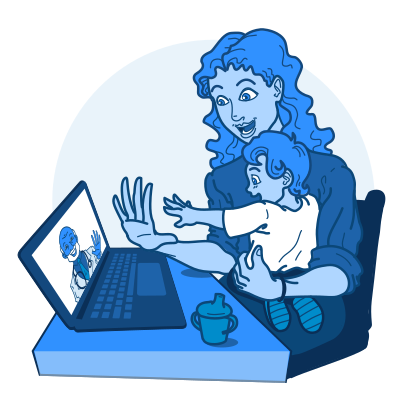
What types of telehealth services can be used for infants and toddlers?
Telehealth can be used for many types of care for young children. Some care can be done by video, phone, secure messages, or remote patient monitoring. Other care may still need to be done in person. Work with your child’s health provider to determine what is right for your child. Telehealth services for infants and toddlers may include:
- Well-child visits. Parts of a well-child visit may be done by telehealth. Your child’s provider can talk with you about your child’s health, including growth, feeding, sleep, behavior, and development. They can also answer questions about milestones, such as walking, talking, playing, and learning. Your child may still need an in-person visit for screenings or a hands-on exam.
- Urgent care. Some of the most common reasons for seeking urgent care for infants and toddlers are fever, rash, constipation or diarrhea, nausea and vomiting, refusal to eat, and cuts and scrapes. Telehealth may help you get medical advice quickly and find out if your child needs an in-person visit
- Primary care. Telehealth can support primary care services for infants and toddlers, such as medication management, tracking symptoms, reviewing test results, and checking recovery.
- Nutrition counseling. The first five years of life are a time of tremendous growth, and good nutrition helps support healthy development. Your child’s provider, a lactation consultant, or a nutrition expert can give you advice on breastfeeding, formula choices, introduction of new foods, healthy food choices, feeding challenges, and detecting food allergies.
- Physical and occupational therapy. Telehealth can be used to provide services for children with developmental delays or special health care needs, including autism spectrum disorder. A therapist may coach you through activities you and your child can do at home.
- Specialty care. If your child has more complex health needs, then they may require care from a pediatric subspecialist. Telehealth can help your child’s regular provider consult with a specialist or help your family access specialty care without as much travel.
- Follow-up care. Telehealth can support follow-up care for your child after discharge from a hospital or emergency room. Checkups can be done virtually to ensure your child's recovery is on track or can help determine if an in-person visit is needed.
- Emotional and behavioral health support. Telehealth can help connect your family with a provider who can support your child’s behavior, sleep, feeding, development, or caregiver-child relationship.
Telehealth visits for infants and toddlers may include:

Live video or phone visits. You, your child, and the provider talk in real-time. This may be used for check-ups, urgent care, follow-up visits, medication questions, or therapy.

Secure messages. You may send information to your child’s provider through a patient portal or app. This can be helpful for non-urgent situations like a rash, a feeding concern, or a question that does not need an immediate answer.

Remote Patient Monitoring (RPM). RPM uses devices to track health information from home, such as weight, oxygen levels, breathing, or other health measures. It may be helpful for some infants or toddlers who need close monitoring.
What are the benefits of telehealth for infants and toddlers?
In-person visits for infants and toddlers often require travel and time off from work. They may keep you away from other family obligations. Telehealth can be a helpful option when medically appropriate. It can also support care between in-person visits. Telehealth may help by offering:
- Convenience. You may be able to talk with your child’s provider from home without traveling to a clinic. This can be helpful when your child is sick, tired, or needs frequent visits.
- Faster access to care. Telehealth may help you get advice sooner, including for urgent concerns or specialty care.
- Less exposure to illness. A telehealth visit may reduce time spent in waiting rooms with other sick people.
- Comfort. Infants and toddlers may feel calmer at home with familiar toys and caregivers nearby.
- Support for healthy growth and development. Telehealth can help your provider track milestones, feeding, sleep, behavior, and other concerns over time.
- More support for parents and caregivers. Telehealth can give you time to ask questions, show the provider your child’s home routine, and learn what to watch for next.
- Better follow-up. Telehealth can make it easier to check in after a hospital stay, surgery, therapy visit, or medication change.
Did you know?
A telehealth visit lets your child’s provider see parts of your child’s home setting. This may help the provider give practical tips about feeding, sleep, safety, play, and daily routines.
How do I prepare for a telehealth visit for my infant or toddler?
The following steps can help you and your child get ready for a telehealth visit.
Before the visit you should:
- Test your technology. Ask if a member of the care team can do a quick test run before the visit. Make sure your speaker, camera, microphone, internet, and audio volume work.
- Choose a good spot. Pick a quiet place with good lighting. Try to reduce background noise and distractions.
- Dress your child in loose, comfortable clothes. This can help if the provider asks to see how your child moves, breathes, or uses their arms or legs.
- Health history. Have your child’s relevant medical records and information at hand, such as a list of their medications. It helps to have notes on your child’s birth history, allergies, recent illnesses, and any recent changes in eating, sleep, or behavior.
- Check your child’s current information. Your provider may ask for your child’s temperature, weight, height, or symptoms.
- Write down your questions or concerns. Jot down any observations about your child you want to discuss in advance of the visit.
- Have something to take notes with. This helps prepare you for the discussion with your child’s provider and anything you want to remember during and after the visit.
During the visit you should:
- Stay calm. Your child may react to how you are feeling. It is okay if your child cries, moves around, or needs a break.
- Have a toy or comfort item available for your child. This will help your child feel comfortable during the virtual visit.
- Speak up. Tell the provider if you do not understand something.
- Ask about next steps. Before the visit ends, ask what to do next, when to follow up, and what signs mean your child should be seen in person.
After the visit you may:
- Review the visit summary. Some providers will send a summary of your telehealth visit.
- Pick up or give medicines. This should be done as directed.
- Schedule any follow-ups. Your child’s provider may recommend a follow-up visit, lab tests, therapy, or referrals.
- Contact your child’s provider. Make sure to contact your child’s provider if symptoms get worse, you have new concerns, or you are not sure what to do.
Tip: Ask your child’s provider how to get help if you have trouble joining the visit, using the patient portal, or using a remote patient monitoring device.
More information:
Can I access telehealth care on demand? — Health Resources and Services Administration
Can I use telehealth for my child with special health care needs? — Health Resources and Services Administration
What are different types of telehealth? — Health Resources and Services Administration
What can be treated through telehealth? — Health Resources and Services Administration
What if I’m having trouble using telehealth? — Health Resources and Services Administration
What is remote patient monitoring? — Health Resources and Services Administration
What should I know before my telehealth visit? — Health Resources and Services Administration