





Telebehavioral health for American Indian and Alaska Native communities
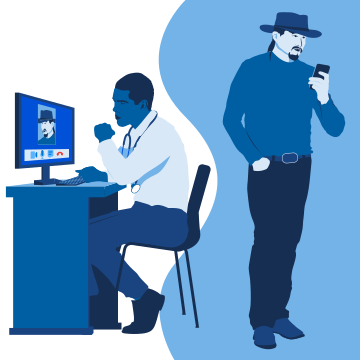
Telebehavioral health can expand access to behavioral health care for American Indian and Alaska Native patients.
On this page:
- How is telebehavioral health used in American Indian and Alaska Native communities?
- What are the benefits of using telebehavioral health in American Indian and Alaska Native communities?
- What types of telehealth technology can be used for telebehavioral health?
- What are important considerations for conducting a telebehavioral health program serving American Indian and Alaksa Natives?
How is telebehavioral health used in American Indian and Alaska Native communities?
Telebehavioral health may be provided to patients at home or at another private location. Common telebehavioral health services include:
- Psychiatric care. Psychiatric assessments, diagnosis, medication management, and follow-up care.
- Individual counseling. Therapy for anxiety, depression, trauma, grief, and other behavioral health needs.
- Group therapy. Counseling that involves family members, partners, or other patients, when appropriate.
- Substance use disorder services. Screening, counseling, treatment, recovery support, and consultations related to medications for opioid use disorder.
- Integrated care. Behavioral health screening, consultation, and treatment coordinated with primary care.
- Care coordination. Follow-up with local providers, pharmacies, and laboratories.
Tip: The IHS Telebehavioral Health Program currently supports services such as adult, addiction, geriatric, and child and adolescent psychiatry; individual and group therapy; family and couples therapy; and trauma and post-traumatic stress disorder therapy.
What are the benefits of using telebehavioral health in American Indian and Alaska Native communities?
Telebehavioral health allows American Indian and Alaska Native communities to receive vital behavioral health services from the comfort of their own safe space. Other potential benefits include:
- Convenient access to specialists and treatments that may not be available in a particular Tribal community or local area. This may eliminate the need for travel for those who do not have access and when telehealth is clinically appropriate for all needs.
- Option for patients who do not want to seek in-person behavioral health services.
- Allows the patient to remain near community support systems and family while receiving care.
What types of telehealth technology can be used for telebehavioral health?
Choose the option that fits the clinical need and patient preference:
- Live video. Video visits can support psychiatric assessments, medication management, individual counseling, group therapy, and provider-to-provider consultations.
- Audio-only visits. Phone visits may help patients who do not have reliable broadband.
- Secure messaging. This can be used for questionnaires and education.
- Mobile health apps. These tools can support activities such as mood tracking and patient education.
What are important considerations for conducting a telebehavioral health program serving American Indian and Alaksa Natives?
Providing telebehavioral care takes planning. Consider the following before launching or expanding services:
- Identify the community’s needs. Engage local leadership, patients, and health care staff. Identify gaps in care and match services to community needs, such as psychiatric care, counseling, group therapy, or substance use disorder treatment. Ask whether and how patients want local cultural practices and what sources of support should be included in their care.
- Assign roles and train staff. Designate a telehealth coordinator. Responsibilities may include scheduling, preparing patients, supporting consent, coordinating with partners, and arranging follow-up care.
- Build the workflow. Make sure the telehealth provider has access to health records and can document care and send referrals. Involve pharmacies and other local partners and define who will handle prescriptions and test results.
- Protect privacy and obtain consent. Obtain and document informed consent as required. Confirm the patient’s identity, who is present, and whether the patient can speak privately.
- Establish an emergency plan. Before the first visit, document the patient’s phone number, physical location, and local emergency contacts.
Tip: Consider how to support patients who may temporarily relocate or work in another location.
More information:
Telehealth for behavioral health care — Health Resources and Services Administration
Telehealth for substance use disorder — Health Resources and Services Administration
Telebehavioral Health Center of Excellence (TBHCE) — Indian Health Service